Blog

Copyright: Forever Less One Day

Script

The origin of copyright law takes us back to the 1710 and Queen Anne, the Monarch who had just overseen the Unification of England and Scotland into then, brand-new Great Britain.

Also on her busy schedule was the Statute of Anne: the very first copyright law. It gave authors control over who could make copies of their books or build on their work a limited time.

Later a group of rebellious colonists, thought the Statue of Anne was a good idea, and so copy/pasted it into their own constitution giving congress the power:

"To promote the Progress of Science and useful Arts, by securing for limited Times to Authors… the exclusive right to their respective Writings".

Basically, copyright is a contract between authors and society: if you promise to make more stuff, we promise not to copy it or build on it for 28 years.

Here's an example from the modern day: let's say you're trying to be a director and you're looking for a project to get started.

Harry Potter is a story you'd love to remake. But since J. K. Rowling published 'The Sorcerer's Stone' in the United States in 1998 it still has copyright protection, so you can't use it.

Instead you need find something from a long time ago, like, for example:

Star Wars: A New Hope!

George Lucas released Star Wars: A New Hope in 1977! That's more than 28 years ago, So great! Get filming!

Alas, no.

While Star Wars should have lost copyright protection in 2005 it's actually copyrighted until 2072!

That's 95 years after publication, not 28!

So you can't use it unless Lucas lets you.

Why does his copyright last for ages?

Well, as long as there has been copyright there have been authors arguing that it's too short.

And perhaps, they're right. How's a poor guy like George Lucas supposed turn a profit in the mere 28 years between 1977 and 2005?

There was only the first theatrical release of 'A New Hope',

And the theatrical re-released in 1978

and 1979

and 1981

and 1982

and then there was the 1982 VHS and Betamax releases

the 1984 broadcast television release

the 1985 Laser disc release

the 1989 widescreen Laser disc release

the 1990 VHS re-release

the 1992 widescreen VHS release

the 1993 Laserdisc re-release

the 1995 VHS re-re-release

and the 1997 special edition theatrical release

Han shot first, you bastard.

and the 1997 VHS special edition release

and the 2004 DVD release

And now you, dear filmmaker, come along and want make your own version of Star Wars: a New Hope? For shame!

That like stealing food right out of George's Lucas' mouth.

Four times Congress has agreed with authors that the length of copyright is too short to turn a profit and so extended it:

First in 1831 from 28 years to 42 years, then again in 1909 to 56 years, in 1976 to the lifetime of the author plus 50 years, and in 1998 to the lifetime of the author plus 70 years.

That's a great deal for authors who have already made stuff, but does it really help society get more movies and books?

It's hard to imagine, for example, that Edgar Rice Burroughs started writing 'A Princess of Mars' and 'Tarzan' in 1911 because the copyright laws had just been extended and would not have done so otherwise.

Or that J. K. Rowling, while living on benefits in Scotland, was busy doing the math and wouldn't have written Harry Potter if the copyright protection was just for her whole life and not an additional seven decades thereafter.

Because, exactly who needs incentives after they're dead? Dead is the point at which literally no incentives in the whole universe can motivate you to write one more screenplay. Because you're dead.

If you're the kind of person who is only motivated by plans that unravel after your demise, you're either amazingly awesome or deranged.

But so what? So what if every kindergartner's macaroni artwork is protected by copyright for 175 years?

Why does it matter?

Because the main beneficiaries of copyright after death are not the authors, or society but companies. Companies like… Disney.

Remember all the good old Disney movies?

Yeah, all of them came from works no longer under copyright protection at the time.

The whole of the Disney Empire and all the childhood magic that it produces only exist because there was copyright free work for Walt Disney – you know the guy who actually started the whole company – to rework and update.

But the corporate, Waltless Disney was the big pusher of the 1998 life +70 years copyright extension. It made sure that no one could make more popular versions of their movies in the same way they made a more popular version of Alice in Wonderland.

This near-infinite control subverts the whole purpose of copyright which is to promote the creation of more books and movies, not to give companies the power to stop people making new creative works based on the efforts on their long-dead founders.

New directors and authors need the freedom to take what came before to remake and remix (romeo & juliet, emma). And they should be able to use creative material from their own lifetime to do so, not just be limited to the work of previous generations.

At the turn of the century, George Lucas wrought upon civilization a new word: anticipointment.

The tremendous let-down that was the lazy, bland, and soulless new trilogy.

George Lucas's was completely within his rights to make those movies into the sterile, toy-marketing vehicles they were. He owned Darth Vader and could tell the origin story as he wished – and that's the only version you'll ever get to see.

But, imagine for a moment, if copyright still worked as first intended.

In 2011 the whole of the original Star Wars trilogy – all of its artwork, its characters, its music – would have left copyright protection and been available to aspiring directors and writers to build upon and make their own versions of.

There would be a treasure trove of new Star Wars stories for fans to enjoy.

But as long as the current copyright laws remain as they are, no living person will ever get to tell a Darth Vader story, or a Harry Potter Story, or a Hobbit Story or any other story that matters to them, that the author or, when after their death, their company, disagrees with.

This video is released under a creative commons BY-NC license.

Credits

Image credits: kristiamb, izzyplante, martintaylor, Joi Ito, Gaetan Lee, fast50, allys_scotland, kessiye (2), thcganja, jdhancock, schluesselbein, mateeee, jurvetson, Randy Pertiet, David Goodger, elaws, andresrueda, pasukaru76, Star Wars Blog.
Gerrymandering Explained

Blog

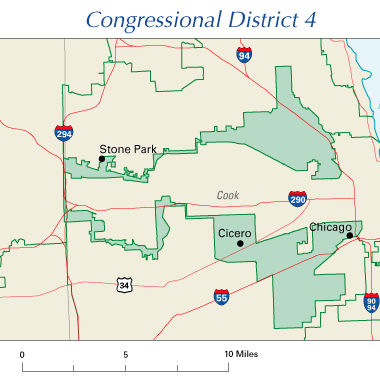
Gerrymandering is the reason that some countries (I’m looking at you, United States) end up with weird electoral districts that look like this one from Illinois:

Or this one from Arizona:

Politicians stretch and distort their districts to these weird shapes for two reasons:

  1. To get more seats for themselves.

  2. To get re-elected without having to run any kind of real campaign.

It’s one of the reasons that, in the United States, the re-election rates for the House of Representatives has been over 85% in every cycle since 1964.

While looking in to solutions for this problem, I came across the interesting people at rangevoting.org who have an solution called ‘shortest split-line’ explained below:

To see some real-world results from their method, here are the current districts for my home state of New York:

And here is how they would look with the split-line method:

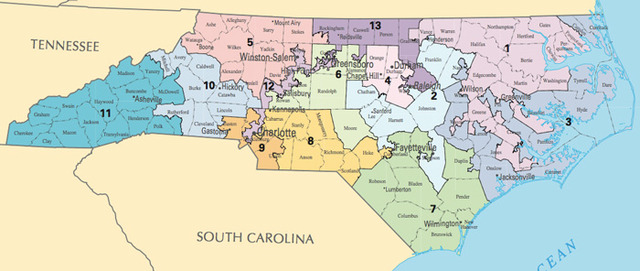
North Carolina, where my parents live, have these districts:

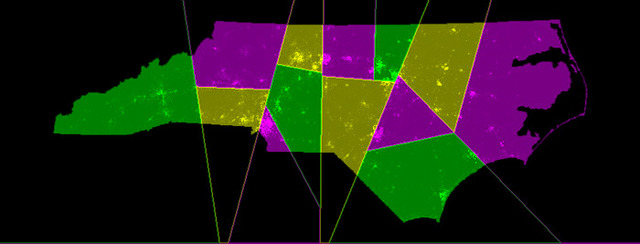
Which are much improved with the split-line method:

And, not that it would ever happen, but if you ignored state lines, all the districts in the House of Representatives would look like this:

While shortest split-line districting would solve the wacky (and unfair) shapes of modern districts, it still doesn’t do anything to help with the problem of two-party control:

Oh, and to cut the pedants off before they start, yes, I know that Gerrymandering is supposed to be pronounced with a hard ‘G’ like ‘Gary Busey’, but I’ve never heard an actual human in real life pronounce it like that, so I’m not going to either.

Script

Queen Lion of the Animal Kingdom is giving more democracy to her citizens by adding a legislative branch to the government.

The citizens each get one vote and are divided into ranges. Each range will elect one representative to send to the newly created Jungle Council.

To best understand how this system works, lets look at a small colony where there are just two political parties: Buffalo & Jackalope.

This colony is divided into four ranges. In the first election Jackalope candidates win two of them and buffalo candidates win the rest.

All is well for several election cycles until the Animal Kingdom Census taker comes round and shows that the population has both moved and grown.

To better represent the larger population a new seat is added to the Jungle council so the ranges’ boundaries must be re-drawn.

This is where the trouble begins. Re-drawing electoral boundaries is a huge political problem.

To help them, the representatives of the Jungle Council hire a weaselly consultant to figure out where the new boundaries should go.

If Weasel draws rectangular boundaries everything is OK because the jungle council will, as close as possible, reflect how the citizens vote.

However, Weasel doesn’t do this. Instead he tells the Buffalo Party that, for a price, he can turn their slim majority into a landslide victory in the election.

With a super-majority on the Jungle Council the Buffalo wouldn’t have to listen to those pesky Jackalope filibusters anymore, so the Buffalo gladly pay up.

How can Weasel deliver on his promise? It’s depressingly simple: by packing together as many jackalope voters into one range as possible and spreading the rest of them out, The Buffalo Party can win an additional seat without any voters switching allegiance.

What Weasel and the Buffalo have done is called ‘gerrymandering’. The intensional changing of electoral boundaries for their benefit.

Several election cycles later the under-represented and disgruntled Jackalope party approaches Weasel and asks if he can manipulate the ranges to be in their favor instead of the Buffalos’.

Indeed he can. Using the same trick, Weasel packs Buffalo voters into a few ranges and spreads the rest among the Jackalope supporters.

After the election the Jackalopes, who represent a minority of the voters are now, nonetheless, the majority party on the Jungle Council.

This is the terrible power of Gerrymandering: Weasel can take the exact same voters and get either party to win the election.

Unsurprisingly, Weasel’s business grows and eventually every colony in the Animal Kingdom pays him to gerrymander their ranges.

With so many clients, Weasel now uses his computer test hundreds of thousands of range combinations with elaborate statistical models of voter behavior to get the results he needs.

Queen Lion has seen what Weasel is up to and banishes him from her kingdom. But, the census taker reminds her that ranges still need to be re-drawn as the population changes. So how is it going to be decided?

Queen Lion suggests the obvious solution: a bi-partisan committee must agree on all new range boundaries.

This seems like a good idea. After all, if both parties have to agree on the ranges, then they must end up being fair to everyone.

But, after a few election cycles using this solution, Queen Lion notices that she always sees the same faces on the Jungle Council. Representatives almost never get defeated in their elections.

It turns out that the interests of the representatives and the interests of the citizens are not the same. Citizens want elections where the candidates have to earn their vote. These are close elections where either candidate has a chance of winning.

But, representatives don’t want close elections, they want safe elections. Elections where they run in a range that is filled with supporters.

Because the representatives are in change of the boundaries they make the safest ranges possible.

So, bi-partisan committees are not enough. To truly fix gerrymandering there are three options:

The first is to set up a politically independent commission of appointed experts or judges to draw the boundaries.

Independent commissions are much better than bi-partisan committees, but still not ideal because they usually group similar areas together so the elections are uncompetitive.

And there is always the possibility that the independent commission is not as independent as it appears.

The second option is to let math decide the boundaries. There are a number of ways to mathematically divide an area into equally populous ranges.

The simplest example of this is called the ‘shortest split-line method’. Find the shortest line that splits the voters in twain and repeat as necessary until all the ranges are made.

This is much better than an ‘independent’ commission, but it does have the problem of occasionally producing skewed election results just through pure bad luck of where the boundaries are drawn.

But by publishing the algorithm used, all citizens can check the results and be confident that there is no intensional bias in the system.

The last solution is an unexpected one: hire back the weasel and embrace gerrymandering. But this time, pay him make the winners most closely match the voters as a whole.

While it seems unsavory, this is actually the best way to avoid disproportionate representation which is, by far, the the worst problem of gerrymandering.

But, considering these three solutions leaves Queen Lion grumpy.

The first two are improvements, but still may result in uncompetitive elections or disproportionate results while the third just feels wrong. Gerrymandering to avoid the problems of gerrymandering is… odd.

Remembering what she learned about voting before, she realizes all this gerrymandering is really just a symptom of a more fundamental problem: the method by which each citizen gets only one vote and elects only one representative.

There are ways to eliminate gerrymandering and restore competitive elections to make her citizens happy, but to do that Queen Lion is going to have to make some big, fundamental changes to her democracy.

Credits:

Images by: Rictor Norton, David C Walker 1967, Billy Lindblom, xlibber, Todd Ryburn, shirobane, Dawn Huczek, TheBusyBrain, Stig Nygaard, Michael Baird, Ana_Cotta, digitalART2, be_khe, Hamed Saber, Pixel Addict, Shawn Allen, Aunt Owwee, Jack Dykinga (USDA), Mykl Roventine, Steve Jurvetson, Boss Tweed, Cecil Sanders, One Laptop Per Child, Martin Pettitt(2), Jim Bowen(2)(3), Brian Sneison, monkeywing, Andrea Allen & audreyjm529.

Coffee: The Greatest Addiction Ever

Blog

In my other life as a time management coach my clients often ask about my use of caffeine. Many of them, for no apparent reason, think that it’s a deal with the devil: coffee makes you more productive, but surely there must be costs to your health.

I wasn’t a coffee drinker until my beautiful (and coffee-obsessedwife introduced me to the stuff. I, like my clients, had never done any research and also just assumed that there must be negative effects.

In order to be more informed, I went off to do some research. The short answer is that back in the 1980s a few studies of caffeine came back with negative health results. These studies were widely republished and started a backlash against coffee but have since been disproven.

Caffeine is one of the most studied drugs ever and there are essentially no health problems for normal people ingesting normal amounts of the stuff. And, aside from that, the benefits that it provides are real and measurable.

I wanted to include more detail in this video, but it was already overly long, so I cut a bunch out and decided to stick it in the blog:

The biggest wives’ tail about caffeine is it stunts children’s growth, which is completely untrue. I imagine this has much more to do with parents not wanting to give their already too-hyper children anything that could possibly make them more hyper than it does with genuine health concerns.

Here is a clip of Steven Johnson talking about coffee and the Age of Enlightenment. There is more in his book The Invention of Air. (He is also the author of the great The Ghost Map – a book I highly recommend everyone read before visiting London.)

On a somewhat related note here is an interesting talk by Clay Shirky that mentions the prevalence of alcohol at the start of the industrial revolution.

Also, one small note about the comment of having a 50% chance of death. That’s not exactly true, but the full details were a little too much to put into the video. 150mg per kg of mass is the lethal dose for 50% of the population, not the chance that if you give someone that much caffeine they will have a 50% chance of dying.

As someone with a background in physics, I was delighted to find out that the amount of caffeine in a person follows a half-life curve. Briefly, if you drink 300mg of caffeine, five hours later there will be 150mg left in your body. Five more hours later there will be 75mg, five more hours 37.5mg and so on.

I quickly geeked out and whipped up a spreadsheet where I tracked and calculated the amount of caffeine in my own body over the week it took to make this video. You can see the results here.

Script

Every day the world consumes 300 tones of caffeine – enough for one cup of coffee for every man, woman and child.

The world’s largest buyer of coffee, the US, has to import nearly all of this as the coffee trees from which caffeine is harvested will only grow at commercial levels between the tropic of cancer and the tropic of capricorn in an area called the coffee belt. Only a single state, Hawaii, is within the belt.

However, the United States is only the largest buyer because it’s so populous. The most enthusiastic coffee drinkers per capita are, in increasing order, the Netherlands, Denmark, Iceland, Norway and, the world champions, Finland, where they drink three times as much coffee a day as the average American. All of these countries are outside of the coffee belt and must import 100% of their caffeine supply.

To get this caffeine, first bees must pollinate the flowers of a coffee tree and these flowers develop into bright red berries. Unlike more cooperative domesticated plants, the coffee tree does not ripen all its berries at the same time so they need to be hand picked and sorted.

Once picked, the coffee bean is removed from inside the berry. This young seedling of the tree is then dried, heated, ground and submersed in boiling water to get out the precious, precious caffeine. It takes about 40 coffee beans to make one shot of espresso.

But why is caffeine in the coffee beans in the first place? It’s not like the coffee trees want to have humans cutting bits of them off and committing a holocaust of their offspring.

Well, the trees, of course, don’t want or feel anything and originally evolved caffeine for their own benefit. Caffeine is an insecticide that effectively paralyzes or kills bugs chomping on the tree.

Whether or not the insects go out experiencing the greatest caffeine high ever is not known.

While caffeine is technically lethal, it’s adapted for for 1g bugs, not monkeys 100,000 times more massive. So you’d really have to try to win this Darwin Award.

But, if you must: to calculate the dose of caffeine you’ll need to ingest to have a 50% of death, take your mass in kilograms and multiply it by 150mg.

Or in terms of coffee, for every kilogram of mass you have you need to drink one latte to get a visit from the grim reaper.

That’s a lot of coffee so it’s not surprising that there are no recored deaths in healthy adults from this method and it’s doubtful that it’s even possible. Because, while you’re busy getting the coffee in, your body is busy getting it out by one way or another.

The rare recorded deaths from caffeine are from diet pills, pep pills and crazy people who eat the drug in its pure form.

Poison though caffeine is, you do still develop addiction to the stuff. And it’s is a real physiological addiction not a wimpy psychological addition like people claim for videos games and the internet.

But caffeine isn’t heroine – rapid withdrawal won’t kill you – it might make you cranky and give you a wicked headache – but since caffeine releases dopamine to make you happy and it gets rid of headaches there’s really no reason to ever stop using it.

And who would want to give up the stuff anyway? I mean, aside from converts to Mormonism and Rastafarianism. Caffeine is the world’s most used psychoactive drug – and with good reason it’s pure awesome.

It increases concentration, decreases fatigue and gives you better memory.

This isn’t just a placebo – these are real effects replicable in a laboratory.

And, contrary to popular belief, drinking coffee isn’t a faustian bargain where the devil gives you the ability to work faster but in exchange makes your life shorter.

For normal, healthy humans there are no medical concerns. Coffee and the caffeine within it may even has medical benefits such as protection from cardiovascular disease, diabetes and Parkinson’s.

Caffeine can even get rid of migraines, but the amount required and the and method of ingestion is… uncomfortable.

Moving right along…

You know what else you can thank caffeine for? A little thing called the enlightenment. In the 1600s people drank more beer and gin than water. But with the introduction of coffee and tea, people switched from a depressant to a stimulant. It’s not surprising then that this time was an intellectual boon compared to earlier centuries.

Ben Franklin and Edward Lloyd loved their coffee for the same reason that modern workers and students do. It’s invaluable for staying awake and concentrating when you need to finish a TPS report or to get through that boring physics class.

Coffee is the fuel of the modern world, so go grab a cup guilt-free and get working smarter and faster.

Credits:

Music by: Kevin MacLeod.

Italian subtitles by: Paola Slajmer.

Russian subtitles by: ÐœÐ°ÐºÑÐ¸Ð¼ Калмыков

Images by: spettacolopuroNoblevmyZestbienbeautouzaJams123n8smithjakeliefer (2) (3)GlennFleishmanPlinkk, Rafti Institute, mradisogloumadmolecule (2)longhorndaveZeusandherafeelizjanoma.clperry_marcoDennis WongmackarusEd SiasocojamesfischerepSos.dePink Sherbet PhotographyrttnapplesOkko PyykkötwakKilnburnkennymaticBruno Henrique Baruta BarretoSuperFantastickaibara87TheLizardQueenmyklroventineasploshstg_gr1makelessnoisewintonrhysasplundhthe_revdierkschaeferbensutherlandhaweevermazerencaseydavidRobert S. Donovanthemarmotrohitchhiberjourneyscoffee & The British Coffee Association.